

Meditation Guidance + Teaching
MEDITATION GUIDANCE + TEACHING
HAVING COMPLETED THREE 10-DAY COURSES, SUZANNE HAS BEEN PRACTICING VIPASSANA MEDITATION DAILY FOR FOUR YEARS. BEFORE THIS, SHE STUDIED ZEN MEDITATION AND ONE-POINTED FOCUS IN ASSOCIATION WITH HER YOGA PRACTICE. SHE LOOKS FORWARD TO SUPPORTING YOU IN YOUR PRACTICE.
What is meditation?
Meditation is the practice of training the brain on a one-pointed focus, usually bodily sensations or respiration. It is not a total “clearing of the mind,” because that would be impossible. Our minds are designed to work. If we “shut down” our brains, we would miss important signals that could possibly save our lives. Some level of alertness is always a good idea. What would help to shut down, though, is the maladaptive overthinking that most of us have made a habit in this modern, fast-paced era.
We often live in the past (and with regret usually comes depression) or the future (and with fear usually comes anxiety), but rarely in the present moment. Why is that? It’s as simple as can be, breathing in and out. Yet any beginner meditation practitioner will tell you it’s anything but easy. Sitting still means avoiding the tempting distractions of life. No planning, no reliving past arguments, no checking in on someone else, and no enjoying sensual pleasures: just being.
At first, the result of a consistent meditation practice may be a stark acknowledgment of the pain and misery we are carrying around inside and doing our best to avoid. When we stop running away from the present moment and simply sit with what is, eventually we will arrive at a peaceful state of acceptance. This is the goal of meditation. We practice to accept what is, as it is, and not how we wish it would be.
Why can’t I meditate?
Students often say that they’ve “tried to meditate, and it just doesn’t work.” They say they can’t “turn off their brain.” Does this sound like you? If so, you’re not alone.
The reality is that meditation is a practice, not a perfect — meaning some days will feel better than others, and at first you might find it impossible. It’s like riding a bicycle. At first, you fall over. But eventually, you get the hang of the balance and it’s a little easier. You can ride for longer. Then you try to ride up a very steep hill, and again it’s impossible. But you keep at it. There will always be challenges as life is far from perfect. The idea is that we keep sitting, keep practicing, and keep accepting the present moment.
How can Suzanne help my meditation practice?
Suzanne practices a style of meditation called Vipassana, which is rooted in Buddhism. You can complete a 10-day course for free at centers all over the world through dhamma.org. This is the only way to learn this method, as it is experiential in nature. However, many students don’t like to “jump in the deep end” with these courses. That’s where the guidance and accountability of working with Suzanne can help.
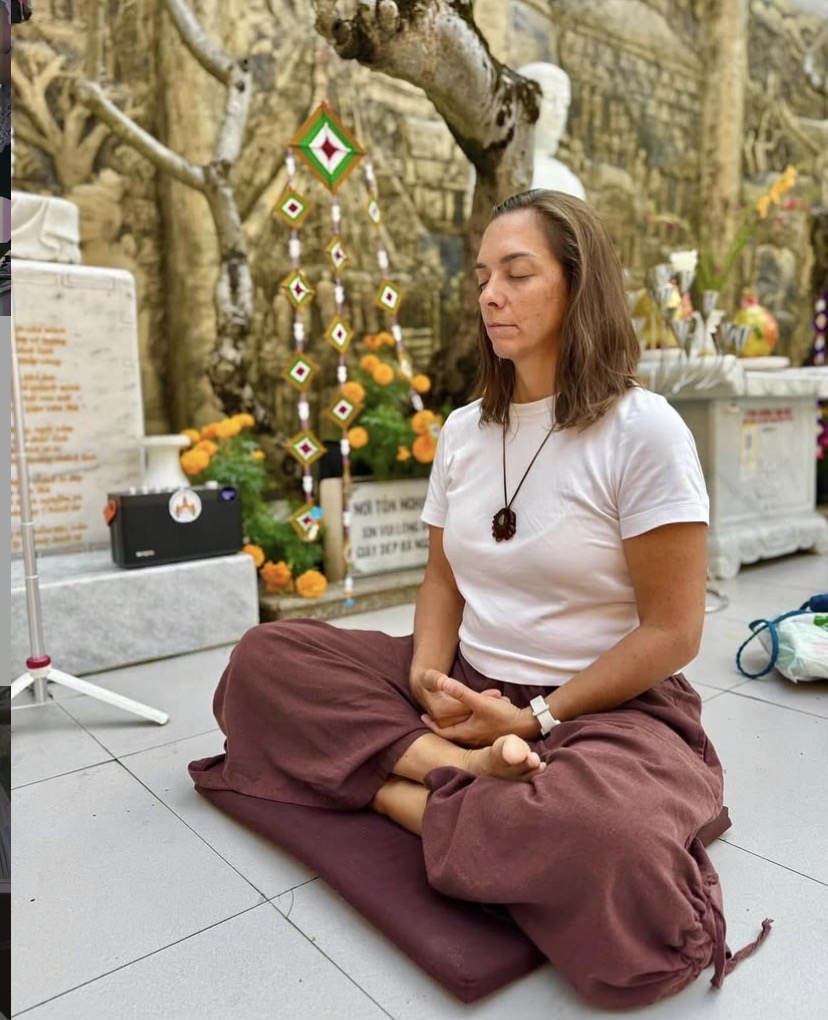
Suzanne offers meditation workshops, which discuss the different kinds of practices and answers questions from beginners. For example, you may struggle with sitting comfortably in a cross-legged position. This may be why you think you “can’t meditate.” Suzanne can help you find a position that is more comfortable so you can practice daily. She works one-on-one remotely to help students learn the process in a relaxed way.
Interested in learning more about meditation?
- Schedule: To book a class or a workshop, start with Suzanne’s Calendly options.
- Platform: Video call (Zoom, Facebook Messenger, Instagram Video calls, Skype) or in person
- Questions?: To inquire about classes, please connect directly with Suzanne at: suzanne @ thelovelightproject.com.